


Views: 0 Author: Site Editor Publish Time: 2025-08-20 Origin: Site


When you see skyscrapers, you notice how tall they are. Their design looks smooth and modern. Steel is the main reason these buildings stand so high. The first steel skeleton was used in the Home Insurance Building in 1885. This showed people that you can build floors much higher than before. Today, engineers use strong steel alloys to make buildings taller and safer. High Rise Steel Structure design needs smart material choices. It also needs clever ways to build and solve big problems.
Steel framing helps buildings go higher.
Modern software makes building more exact.
Flexible steel frames keep buildings safe in earthquakes.
Steel is very important for high-rise buildings. It gives the building strength and helps it bend without breaking. This lets buildings be taller and safer.
The foundation is very important. Engineers pick the best foundation system for each building. This keeps tall buildings safe and steady.
The core and frame are like the building’s bones. Steel frames make big open spaces inside. They help buildings stand up to strong winds and earthquakes.
Facade design is important. A good facade keeps out bad weather. It also makes the building look nice and saves energy.
Picking the right structural system is important. Systems like moment frames and braced frames help buildings stand up to wind and earthquakes.
Designing a high rise steel structure is like putting together a huge puzzle. You have to think about how the building stands up. You also need to make sure it is safe. The way it looks from the outside matters too. There are three main parts to focus on: foundation systems, core and frame, and facade design. Each part helps your building go higher and stay strong for a long time.
When you build a high rise steel structure, you begin with the foundation. The foundation supports the whole building, so it must be very strong. You cannot use just a simple concrete slab for tall buildings. Engineers use special systems that go deep underground.
Foundation System | Effectiveness Description |
|---|---|
Deep Foundations | Works well in many soil types, giving stability for high-rise buildings. |
Combined Pile-Raft Foundations | Handles earthquakes well, making buildings safer and stronger. |
Advanced Foundation Systems | Needed for super-tall buildings like Burj Khalifa, showing why new ideas are important. |
These systems are important for tall buildings. Deep foundations use long piles that reach solid ground or rock. This stops your high rise steel structure from sinking or leaning. Combined pile-raft foundations use piles and a thick slab to spread the weight. This helps keep the building safe during earthquakes. For very tall skyscrapers like Burj Khalifa, engineers use advanced systems. These mix different methods to hold up huge weight and forces.
Tip: Always pick a foundation system that matches the soil and the building’s height. This keeps your high rise steel structure steady and safe.
The core and frame are like the bones and backbone of your building. The core is usually in the middle. It holds elevators, stairs, and utility shafts. The frame goes around the core and supports the floors and walls. Steel makes a big difference here.
Steel helps core and frame systems work better in skyscrapers:
Steel is strong and tough, so you can build taller and thinner buildings.
Steel bends easily, so you can make new shapes and designs.
Steel frame construction makes building faster and saves money.
Using steel for the core and frame gives you a lighter building. It can still stand up to strong winds and earthquakes. The Willis Tower in Chicago uses a bundled tube design. Many steel tubes work together to hold up the building. This makes it strong but not heavy. The Shanghai Tower uses big steel columns and outriggers. These help the building fight wind and stop it from moving too much.
Top steel structure companies sell pre-made steel beams and columns. These fit together quickly at the building site. This makes high-rise construction faster and more dependable. The steel has coatings that protect it from rust and fire. This adds more safety.
Note: Steel frames let you make open floor plans. You can design offices, apartments, or hotels with fewer columns in the way.
The facade is the front of your building. It is the first thing people see. It also keeps out wind, rain, and sun. In a high rise steel structure, the facade must be light but strong. Steel framing helps make this happen.
Here are some new ideas in facade design for steel-framed high-rise buildings:
The Viridi Apartments in Melbourne use over 36,000 feet of cold-formed steel framing for the facade.
The facade has more than 15,000 terracotta tiles, making the building look special.
Engineers built a custom steel truss system to keep the facade safe and steady.
Steel lets you use big glass panels, metal screens, or special tiles. You can make patterns, colors, and textures to make your building stand out. The steel frame behind the facade holds everything in place. It works even when strong winds blow at the top of the skyscraper.
Some companies sell modular steel facade systems. These come in pieces you can lift and attach quickly. This saves time and helps avoid mistakes during high-rise construction.
Did you know? The right facade design can help save energy. Steel frames hold double-glazed windows and insulated panels. This keeps the building cool in summer and warm in winter.
You can see these design ideas in some famous skyscrapers:
Skyscraper | Year | Notable Design Features |
|---|---|---|
Burj Khalifa | 2010 | Buttressed core design, spire-like shape, tallest building in the world (828 meters) |
Shanghai Tower | 2015 | Outriggers and mega columns for wind resistance, new structural system |
Willis Tower | 1974 | Bundled tube design, lighter weight per square foot, very tall with advanced structural systems |
The Burj Khalifa uses a buttressed core made of steel and concrete. This helps it reach its record height.
The Shanghai Tower’s steel mega columns and outriggers fight strong winds.
The Willis Tower’s bundled tube system uses steel to make a lighter, taller building.
When you design a high rise steel structure, you use smart foundation systems, a strong steel core and frame, and a creative facade. All these parts work together to help your building stand tall, look good, and last for many years.
When you look at skyscrapers, you might wonder how they stay upright and safe, even when the wind blows hard or the ground shakes. The answer lies in the structural systems that support these tall structures. In high-rise construction, you need to pick the right system to make sure your building stands strong and lasts a long time. Steel plays a huge role in these systems. It gives you the strength and flexibility you need for buildings that reach impressive heights.
As buildings get taller, they face more challenges from wind and earthquakes. You have to think about how to resist these forces. The right structural system helps your high-rise building stay stable and safe. Let’s look at the most common systems you’ll find in steel skyscrapers.
Moment frames work like the skeleton of your building. You connect steel beams and columns together with rigid joints. These joints do not move, so they can resist bending and twisting. When the wind pushes against your high-rise, the moment frame helps the building stay upright. You get a strong structure that can handle both up-and-down and side-to-side forces.
You will see moment frames in many high-rise construction projects. They let you design open spaces inside your building because you do not need as many walls or braces. This makes your building more flexible for offices, apartments, or hotels. The rigid connections between the steel beams and columns help your building fight against wind and earthquakes. You get a safer and more comfortable place for people to live or work.
Tip: If you want a building with big, open rooms and lots of windows, a moment frame system is a great choice. It gives you strength without blocking your view.
Braced frames add extra support to your building. You use diagonal steel beams or braces to connect the columns and beams. These braces help your building resist strong winds and shaking from earthquakes. When you use braced frames in high-rise construction, you make your building much stiffer. This means it will not sway as much, even at the top floors.
Here’s how braced frames help your skyscraper:
They control how much your building sways in the wind.
They let your building move safely during an earthquake, so it does not break.
They use steel braces, which are light but very strong.
You can see braced frames in many tall structures around the world. Sometimes, you will notice the diagonal steel braces on the outside of the building. Other times, they hide inside the walls. Either way, these frames make your high-rise safer and more stable.
Note: Braced frames are a smart choice if you build in places with lots of wind or earthquakes. They help your building last longer and keep people safe.
Tube structures changed the way you build skyscrapers. In this system, you use steel columns and beams placed close together around the outside of your building. These form a strong “tube” that supports the whole structure. The tube acts like a giant steel box. It resists wind and lets you build much taller than before.
The tube structure was a big step forward in high-rise construction. You can see it in famous buildings like the Willis Tower. The outside steel frame carries most of the weight and force. This means you can have fewer columns inside, giving you more open space. The tube design also lets you create cool shapes and styles for your building.
Did you know? The tube structure lets you build supertall skyscrapers that look amazing and stand up to strong winds.
You might also find other systems in steel skyscrapers. Here are some examples:
Diagrid Structures: These use a diagonal grid of steel beams and columns. The pattern spreads out the weight and helps the building resist wind and earthquakes.
Tuned Mass Dampers: These are huge weights placed near the top of the building. They move in the opposite direction of the building’s sway, making it feel steadier inside.
Here’s a quick look at some common structural systems you might use in high-rise construction:
Structural System | How It Helps Your Building |
|---|---|
Rigid Frame | Gives you open spaces and resists bending. |
Braced Frame | Controls sway and helps with wind and earthquakes. |
Outrigger System | Connects the core to outer columns for extra support. |
Framed-Tube | Uses the outside frame as the main support. |
Braced-Tube | Adds diagonal braces to the tube for more strength. |
Bundled-Tube | Groups several tubes together for supertall buildings. |
As you build higher, you need to think about how your building will handle wind and earthquakes. Picking the right steel structural system is key to making your high-rise safe and strong.
You cannot ignore the importance of structural systems in high-rise construction. They help your building stand tall, even when nature tries to knock it down. Steel gives you the power to create new shapes, reach new heights, and keep people safe inside. When you choose the right system, you solve big engineering problems and make your skyscraper a success.
When you think of skyscrapers, you probably imagine steel. Steel is very important for building tall structures. You see steel in the tallest and coolest buildings. Let’s find out why steel is the best choice for skyscrapers and how it helps make them so tall.
Steel is special because it has great qualities. It is strong, lasts a long time, and can bend without breaking. Here are some reasons why steel works well for high-rise construction:
Property | Description |
|---|---|
Strength | Holds a lot of weight with less steel, perfect for skyscrapers. |
Durability | Stays strong in bad weather and lasts many years. |
Ductility | Bends when stressed, keeping buildings safe in earthquakes. |
Flexibility | Lets you make new shapes and designs for tall buildings. |
Fire resistance | Does not get weak in high heat, so buildings are safer. |
Cost-effective | Easy to put together and take care of, saving money and time. |
You can make steel into beams, columns, and frames. This helps you build tall buildings that are strong and can handle tough weather.
Steel is better than concrete and wood in many ways. It is lighter but still very strong, so you can build taller buildings with less material. Steel’s light weight makes building faster and easier. It also has great tensile strength, so your building can handle earthquakes and strong winds.
Steel can be recycled and lasts a long time. You can use steel frames again, which is good for the planet. Concrete makes more pollution, and wood needs to be carefully chosen. Steel buildings use less energy and need fewer repairs. Over time, you spend less money fixing and heating or cooling your building.
Tip: Steel buildings can help you save 10-20% on energy bills every year compared to other materials.
Steel lets you build taller than ever before. The kind of steel you pick changes how much weight your building can hold. You need steel that can handle bad weather and follows safety rules. This helps you build even higher skyscrapers.
Different steel types change how strong and sturdy your building is.
Steel that resists weather helps keep tall buildings safe.
Safety rules and fire codes affect what steel you use.
Steel’s strength-to-weight ratio lets you design skyscrapers that reach the sky. You get more room inside and can make cool designs.
Designing high-rise buildings with steel brings some big engineering challenges. You face strong winds, earthquakes, and heavy loads every day. You also need to think about new ways to keep tall structures safe and efficient. Let’s look at how you can tackle these problems in high-rise construction.
When you build skyscrapers, wind and earthquakes test your skills. You need to make sure your steel building stands firm, even when nature gets wild. Engineers use earthquake simulators to check how steel frames react to shaking and swaying. You see them run tests to find the best way to keep buildings safe.
Here’s a table showing how engineers handle wind and seismic forces:
Aspect | Description |
|---|---|
Design Methodology | You use performance-based design to handle wind and earthquakes at the same time. |
Ductile Members | You pick steel members that bend without breaking, so your building stays strong. |
Multi-Hazard Design | You follow codes that help your building resist both wind and earthquakes. |
Wind Reduction Factor | You use special factors to lower wind loads and improve building safety. |
Nonlinear Analyses | You run earthquake simulator tests to check how much your building moves and shakes. |
Fragility Concept | You measure how well your building stands up to different hazards. |
You see earthquake simulator results help you choose the right steel and design. This keeps your high-rise safe, even when the ground shakes or the wind blows hard. You also use wind tunnels and computer models to test height limits for buildings.
You need to manage many loads in high-rise construction. Steel buildings carry dead loads, live loads, wind loads, seismic loads, and more. You use earthquake simulators to see how these loads affect your building.
Here’s a quick look at the types of loads you deal with:
Load Type | Description |
|---|---|
Dead Loads | Weight of steel beams and floors. |
Live Loads | People, furniture, and machines. |
Wind Loads | Pressure from strong winds. |
Seismic Loads | Earthquakes shaking your steel building. |
Snow Loads | Snow or water piling up on your roof. |
Special Loads | Cranes, thermal changes, and impacts. |
You plan for each load to keep your building safe. You use earthquake simulator data to check if your steel frame can handle sudden shocks. You also look at height limits for buildings to make sure your design works for the location.
Tip: Always check your steel frame with earthquake simulator tests before you start building. This helps you avoid surprises.
You see new ideas every year in high-rise construction. Engineers use steel for strength and flexibility. They also use earthquake simulators to test new designs. Here are some cool solutions you might find:
Modular steel systems make building faster and safer.
Steel and concrete work together for better fire resistance.
Automation and prefabrication save time and money.
Digital modeling helps you plan your steel frame before you build.
Composite steel beams give you more strength and less weight.
Advanced control systems keep workers and pedestrians safe.
Overload switches and safety brakes protect your building during emergencies.
You notice that steel buildings cost less to maintain. You can change your building’s layout if your needs grow. You also see earthquake simulator results help you improve safety features. These innovations push the height limits for buildings higher every year.
Did you know? Engineers use earthquake simulators to test steel skyscrapers before anyone moves in. This keeps everyone safe and helps you build taller than ever.
You may wonder which buildings are the tallest with steel frames. The Willis Tower in Chicago is the tallest steel-framed building in the world. Many other skyscrapers use steel to reach high into the sky. Here is a list of the top ten tallest steel-framed buildings:
Rank | Building Name | Height (m) | Country |
|---|---|---|---|
1 | Willis Tower | 442 | USA |
2 | Empire State Building | 381 | USA |
3 | Aon Centre | 346 | USA |
4 | The Centre | 346 | China |
5 | John Hancock Centre | 344 | USA |
6 | Minsheng Bank Building | 331 | China |
7 | China World Trade Centre III | 330 | China |
8 | Chrysler Building | 319 | USA |
9 | New York Times Tower | 319 | USA |
10 | US Bank Tower | 310 | USA |
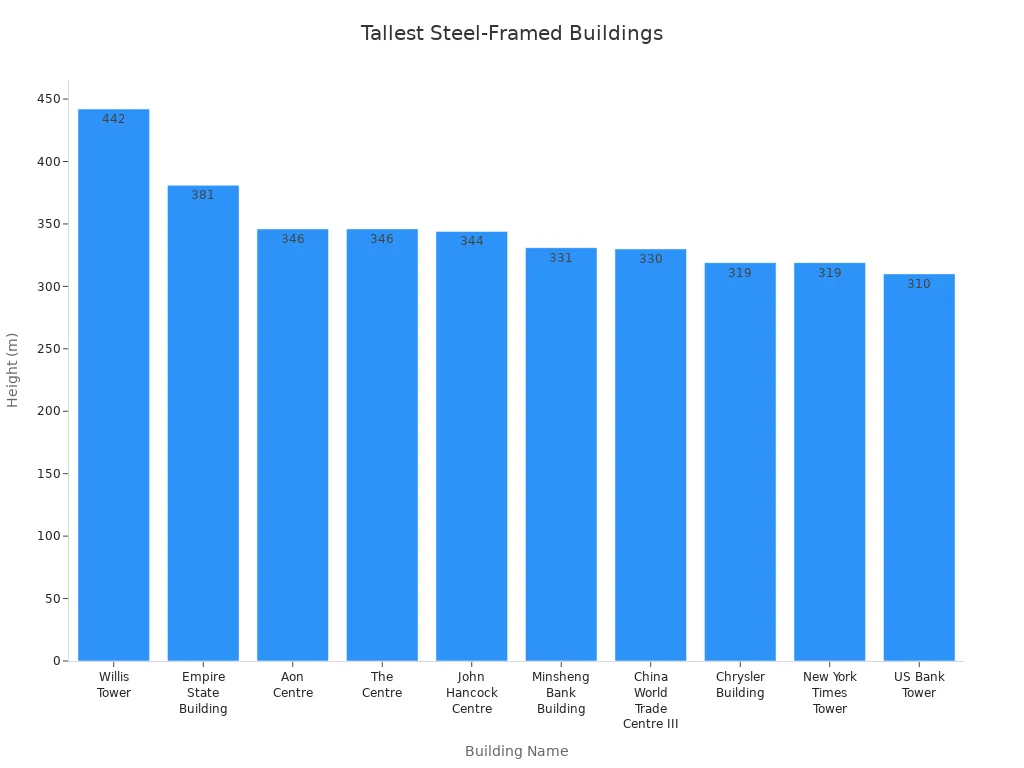
Willis Tower stands very tall in Chicago. Engineers used a bundled tube system with nine tubes. This design helps the building stay strong in the wind. The tubes mean there are fewer columns inside. This gives you big open rooms. Fazlur Rahman Khan came up with this idea. Now, many tall buildings use this system for strength and flexibility.
Tip: Bundled tube systems help you build taller and safer with less steel.
One World Trade Center in New York has deep foundations and steel stud wall systems. Big concrete footings hold the building to the bedrock. Damping systems and a heavy tuned mass damper at the top help stop the building from swaying. These features keep the building safe during storms or earthquakes.
Feature | Description |
|---|---|
Deep Foundations | Concrete footings go 60 feet down for strength. |
Damping Systems | Take in and spread out wind energy. |
Tuned Mass Damper (TMD) | A 400-ton weight helps balance the building in strong winds. |
Tokyo Skytree shows how steel can mix old and new ideas. The building uses arcs and cambers like Japanese swords. The shinbashira core pillar helps the tower stand up to earthquakes. A steel-reinforced cylinder moves on its own to lower shaking during earthquakes. High-rise buildings in Japan focus on safety and style.
Feature | Description |
|---|---|
Arcs and Cambers | Look like swords and temples for strength and beauty. |
Shinbashira | Core pillar design helps with earthquake safety. |
Steel-reinforced Cylinder | Moves by itself to lower shaking from earthquakes. |
Lotte World Tower in Seoul uses steel to go very high. The core walls in the middle hold most of the weight. Mega columns around the outside hold the rest. Steel beams connect everything and hold up the floors. Outriggers and belt trusses help the tower stay steady in strong winds.
Component | Function | Load Handling |
|---|---|---|
Core Walls | Main support in the center | 60% of load |
Mega Columns | Support around the outside | 40% of load |
Steel Beams | Hold up the floor slabs | Gravity system |
Outriggers & Belt Trusses | Help the tower stay steady | Stabilization |
Other famous tall buildings with steel frames are Ping An Finance Center in China and the Makkah Royal Clock Tower in Saudi Arabia. Steel lets people build taller, safer, and more creative skyscrapers all over the world.
When you see tall buildings, steel makes a big difference. Steel gives buildings more strength and helps them go up faster. It also lets architects create cool shapes. Look at this table to learn what makes steel structures special:
Aspect | Description |
|---|---|
Strength-to-Weight Ratio | Lets you build taller without extra material |
Prefabrication Potential | Speeds up construction and boosts quality |
Adaptability | Makes bold designs possible |
In the future, skyscrapers will use smarter steel. Builders will use green building methods. AI will help keep buildings safe. New high-rise designs will break records and bring fresh ideas.
You get strength, flexibility, and speed with steel. It lets you build taller and safer. Steel resists earthquakes and wind. You can also create open spaces and cool designs. That’s why most skyscrapers use structural steel framing.
A steel skeleton structure acts like the building’s bones. It holds up all the floors and walls. The steel frame spreads out the weight, so your skyscraper stands tall and strong, even in storms or earthquakes.
Yes! Steel frames let you move walls or make bigger rooms. You can update offices or apartments without much trouble. This makes your building flexible for future needs.
Engineers use special joints and braces. These help the building bend without breaking. They also test designs with earthquake simulators. This keeps people safe when the ground shakes.
The facade protects your building from wind, rain, and sun. It also makes your skyscraper look unique. Steel frames support big glass panels or special tiles, so you get both style and strength.


