


Views: 142 Author: Site Editor Publish Time: 2026-07-01 Origin: Site


Aviation infrastructure presents a formidable design challenge. Architects and engineers must balance vast, column-free passenger spaces against strict security protocols. They also face uncompromising aesthetic demands and notoriously aggressive construction schedules. Traditional building materials often fall short under these intense pressures.
Engineered steel emerges as the definitive structural approach for high-capacity transit hubs. It provides the necessary strength-to-weight ratio to achieve sweeping canopies and open concourses. This material allows designers to push boundaries while meeting rigorous safety standards.
We created this guide to establish a concrete framework for project stakeholders, lead architects, and procurement teams. You will learn how to evaluate various steel structural solutions effectively. We will cover how to navigate architectural demands, compare pre-engineered versus custom options, and mitigate site implementation risks. Mastering these elements ensures your transit hub succeeds both functionally and visually.
Engineered steel enables long-span, column-free designs essential for passenger flow and terminal adaptability.
Selecting between Pre-Engineered Buildings (PEB) and custom structural steel depends directly on project scale, architectural complexity, and timeline.
Evaluating a structural partner requires looking beyond material costs to assess fabrication tolerances, complex node detailing, and logistical capabilities.
A well-executed steel roof airport terminal integrates complex static and dynamic load management without compromising aesthetic intent.
Designing an Airport Terminal Building requires a distinct approach. These structures must process millions of people efficiently. They cannot rely on standard commercial building templates. Every structural choice directly impacts daily operations and passenger experience.
Modern transit hubs measure success across several interconnected functional areas. We must evaluate structural designs based on these specific performance metrics:
Passenger Throughput: Massive interior spaces prevent bottlenecking at security checkpoints and gate areas.
Natural Light Integration: Expansive skylights and glass curtain walls reduce lighting loads. They also improve the psychological comfort of travelers.
Future Expansion Viability: Terminals must adapt to growing flight schedules. Steel frames allow for modular additions without disrupting existing operations.
The canopy acts as the primary architectural signature of the facility. A well-designed Steel Roof Airport Terminal supports vast clear spans. These spans routinely exceed 100 meters. By eliminating interior support columns, designers remove major physical barriers. This uninterrupted floor plate creates highly flexible ticketing halls. It gives airport operators the freedom to reconfigure kiosks, retail spaces, and security lanes as technology evolves.
Large-scale public infrastructure demands extreme structural resilience. You must engineer the roof system to handle severe environmental stressors. Wind uplift poses a massive challenge for broad, flat, or aerofoil-shaped canopies. Engineers must calculate localized wind pressures meticulously. Heavy snow loads require robust truss profiles to prevent catastrophic deflection. Furthermore, seismic event compliance dictates the use of advanced moment-resisting frames. These frames absorb and dissipate lateral ground forces safely. Adhering to these strict building codes ensures absolute public safety.
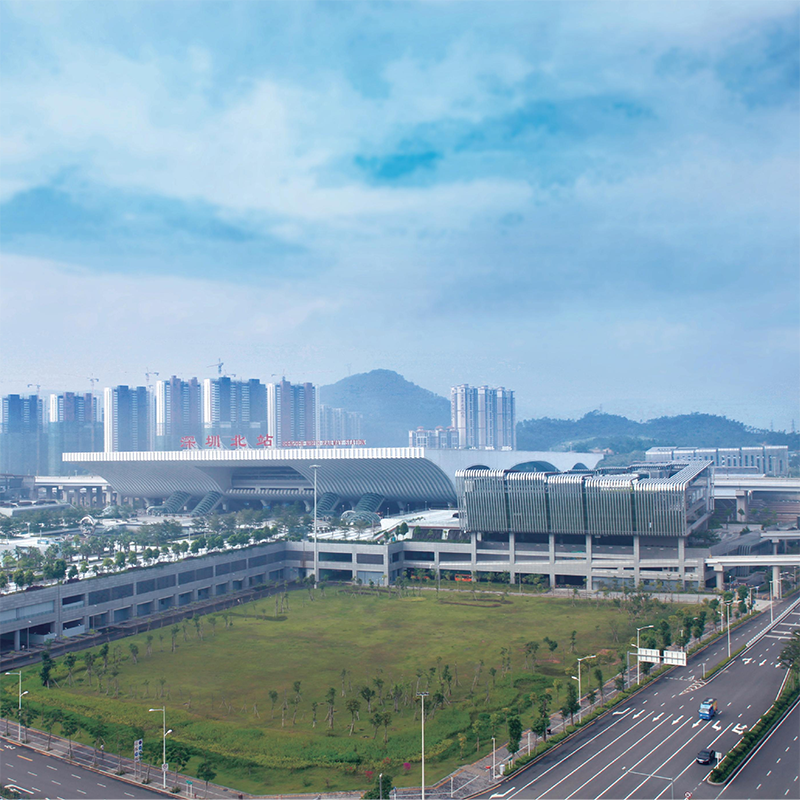
Selecting the right structural methodology forms the foundation of your project timeline and budget. You generally choose between two distinct pathways. Each offers specific benefits and inherent limitations.
PEB systems utilize predetermined steel profiles. Fabricators manufacture these components off-site and ship them ready for assembly.
Best for: Regional airports, secondary concourses, and expansive cargo or maintenance hangars.
Advantages: PEB relies on standardized components. This standardisation drastically accelerates delivery schedules. You also benefit from highly predictable upfront budgeting.
Limitations: These systems lack high architectural flexibility. They struggle to accommodate sweeping curves or highly complex, iconic geometric shapes.
Custom fabrication involves designing every column, beam, and truss from scratch. This approach caters to unique architectural visions.
Best for: Primary international hubs and architecturally significant mega-terminals.
Advantages: You unlock unlimited geometric possibilities. Custom steel easily supports sweeping multi-planar intersections and massive, irregular canopies.
Limitations: This route requires rigorous structural analysis. It involves much longer fabrication lead times and demands higher upfront engineering capital.
You must align your architectural intent, capital constraints, and project timeline carefully. The chart below summarizes the core differences to guide your selection.
Evaluation Metric | Pre-Engineered Buildings (PEB) | Custom Structural Steel |
|---|---|---|
Design Flexibility | Low to Moderate (Standard shapes) | Unlimited (Highly complex geometry) |
Delivery Speed | Fast (Standardized fabrication) | Moderate to Slow (Bespoke detailing) |
Maximum Clear Spans | Typically up to 90 meters | 150+ meters (Space frames/Trusses) |
Engineering Complexity | Low (Software automated) | Extremely High (Advanced node design) |
Engineering a massive transit hub goes far beyond basic load calculations. You must address nuanced structural behaviors. These behaviors dictate the long-term safety and usability of the facility.
Expansive interior spaces create specific dynamic challenges. Floor vibration becomes a major issue in elevated passenger lounges. Heavy foot traffic and rolling luggage induce micro-vibrations. Engineers must stiffen floor framing to meet strict human comfort criteria. Similarly, expansive roof trusses naturally bend under gravity and environmental loads. Managing this deflection requires deep trusses and strategic cambering. Proper cambering ensures the roof remains perfectly level after applying dead loads.
In long-span trusses, the connection points carry immense stress. These nodes completely dictate the project's success. We must evaluate different connection methodologies carefully.
Cast Steel Nodes: These are ideal for multi-directional structural intersections. Cast nodes eliminate overlapping weld seams. They offer superior fatigue resistance and a clean, architectural finish.
Welded Plate Nodes: These are more common and easier to fabricate locally. However, they require massive amounts of skilled welding. Excessive welding can introduce residual stresses into the steel frame.
A modern terminal acts as a living machine. The steel structure must seamlessly house massive mechanical systems. You must integrate oversized HVAC ducts, intricate baggage handling conveyors, and heavy fire suppression networks. Deep long-span trusses excel here. Engineers can route these critical systems directly through the truss depth. This integration maximizes ceiling height and preserves the architect's aesthetic vision.
A brilliant structural design means nothing if you cannot build it safely and accurately. On-site implementation brings significant logistical and physical risks. You must manage these realities proactively.
Stringent fabrication tolerances separate successful projects from delayed disasters. In long-span structures, microscopic deviations compound rapidly. A two-millimeter error at a column base can translate into a fifty-millimeter misalignment at the roof apex. This stacking effect causes critical delays during on-site assembly. Fabricators must employ advanced laser-scanning and CNC machinery. Strict quality control ensures every bolt hole aligns perfectly on the job site.
Quality Control Stage | Standard Practice | Aviation Grade Requirement |
|---|---|---|
Material Testing | Mill certificates | Independent third-party ultrasound testing |
Dimensional Checks | Tape measure / manual | 3D Laser scanning (LIDAR) of assemblies |
Trial Assembly | Random sampling | 100% virtual or physical pre-assembly |
Moving massive steel members requires meticulous planning. You navigate immense supply chain risks when transporting oversized structural elements. Modular space frames and heavy truss sections often exceed standard highway limits. Transporting these pieces to active or remote airport sites demands specialized heavy-haul trailers. You must coordinate road closures, secure special permits, and navigate tight airport security checkpoints. Poor logistical planning halts construction instantly.
The fabricator's proposed assembly sequence dictates the pace of construction. We generally evaluate two main erection methodologies:
Ground Assembly and Heavy Lifting: Crews bolt massive roof sections together on the ground. Specialized strand jacks or crawler cranes then lift the entire module into place. This method maximizes worker safety and reduces high-altitude welding.
Piece-by-Piece Aerial Erection: Crews assemble the frame directly in the air using temporary shoring towers. This approach minimizes the required site footprint. However, it exposes workers to greater heights and slows down the overall schedule.
You cannot entrust an Airport Terminal Building to a standard commercial steel fabricator. The scale, complexity, and risk profile require a highly specialized partner. Follow this logic to shortlist potential vendors.
A portfolio full of standard warehouses or mid-rise offices is completely insufficient. You must look for verified completion of high-security, heavy-load infrastructure projects. Ask for case studies involving vast clear spans and complex geometry. The right partner understands the unique pressures of working within active aviation environments. They know how to handle multi-agency approvals and rigorous safety inspections.
Your partner must operate with complete technical transparency. Assess their use of advanced 3D modeling software, such as BIM and Tekla Structures. They should provide highly detailed Level of Development (LOD) 400 models. Furthermore, they must willingly share all load calculations, connection designs, and stress analyses. This collaborative approach prevents costly clashes between the steel frame and mechanical systems.
Infrastructure projects often span several years. Your steel partner must exhibit rock-solid financial stability. Verify their mill certifications and raw material procurement networks. They must possess the financial bandwidth to float massive material purchases early in the project timeline. A financially weak fabricator creates an unacceptable risk of project abandonment.
Once you identify capable partners, move beyond basic bidding. Initiate a formal technical feasibility review. Request detailed assembly methodologies and logistics plans alongside standard RFQs. This step reveals whether the fabricator truly understands the specific constraints of your site.
The structural backbone of an aviation facility dictates its long-term operational success and scalability. You cannot compromise on the engineering or the execution. As we have explored, mastering these massive spaces requires a deeply technical approach.
Engineered steel remains the only viable material for achieving extreme clear spans.
Your choice between pre-engineered systems and custom fabrication directly shapes your design boundaries.
Complex node design and strict deflection management guarantee public safety.
Rigorous quality control prevents microscopic errors from destroying your assembly schedule.
Mitigating risk requires partnering with fabricators capable of navigating complex engineering, stringent tolerances, and demanding logistics. Do not wait until the final design phases to consult structural experts. We encourage technical teams to share preliminary architectural models immediately. Seek a structural feasibility and optimization consultation today to secure your project's foundation.
A: Engineered steel trusses and complex space frames routinely achieve clear spans of 100 to 150 meters. In some mega-terminals, spans can push beyond 150 meters. The absolute maximum depends heavily on the structural depth of the truss system, the required roof load profiles, and the specific environmental conditions of the site.
A: Both systems offer highly comparable, multi-decade lifespans. They must both be engineered to meet strict regional building codes. When treated with advanced anti-corrosion coatings and properly maintained, PEB systems resist degradation excellently. However, custom heavy-steel structures are generally better equipped to handle repeated, heavier dynamic loads over a century-long lifespan.
A: Extreme environmental forces dictate the entire connection strategy. High wind and seismic activity require robust moment connections to transfer lateral forces safely. Engineers must implement specialized diagonal bracing systems. They also rely on sophisticated node engineering to ensure the frame remains resilient and flexible under intense dynamic stress without fracturing.


