


Views: 162 Author: Site Editor Publish Time: 2026-06-22 Origin: Site


High-velocity hurricane zones (HVHZ) expose construction materials to extreme lateral loads, violent uplift forces, and sudden debris impact. Traditional framing methods typically require complex, highly vulnerable retrofitting to meet minimum survivability baselines in these challenging areas. For developers, architects, and commercial property owners in coastal regions, selecting the right structural framework remains a high-stakes financial and safety decision. Property loss during a severe storm rarely stems from total immediate collapse. Instead, it usually begins when the building envelope fails and structural load paths break apart.
This comprehensive guide evaluates the core engineering realities, strict compliance standards, and long-term financial advantages of utilizing modern steel construction. You will discover a clear, actionable framework designed for decision-makers assessing cold-formed steel (CFS) inside high-wind environments. We will explore exactly how these robust structures prevent catastrophic failure, streamline rigorous code compliance, and ultimately safeguard your most valuable investments against unpredictable weather events.
Continuous Load Path: Hurricane-rated steel buildings rely on mechanical fastening and predictable material yield strengths to prevent uplift and structural disconnection during extreme wind events.
Code Compliance: Steel framing natively supports precision engineering required for stringent HVHZ regulations, including the Florida Building Code (FBC) and ASCE 7 standards.
Risk Mitigation: While initial material costs may vary, steel framing drives favorable ROI through reduced insurance premiums, lower maintenance overhead, and minimized downtime post-disaster.
Implementation Reality: Success requires localized engineering, specialized anti-corrosion coatings (e.g., G90 galvanization) in coastal areas, and software-driven design to ensure accurate wind-load calculations.
Property loss in hurricanes rarely happens all at once. It almost always begins at structural weak points. The failure of the building envelope initiates a dangerous chain reaction. A broken window allows hurricane-force winds to enter the interior. This sudden breach pressurizes the building from the inside. Simultaneously, wind passing over the roof creates immense external suction. This combined push-and-pull effect actively tries to tear the roof away from the walls.
We must engineer a continuous load path to prevent catastrophic structural separation. Properly designed Hurricane-Rated Steel Buildings rely entirely on integrated mechanical fasteners. These include high-strength self-tapping screws, heavy-duty bolts, and specialized engineered tiedowns. Traditional wood construction often relies heavily on gravity and the friction provided by nails. Unfortunately, smooth nails easily pull out under extreme, cyclical wind suction.
Steel framing directly transfers extreme uplift forces safely into the ground. A properly engineered continuous load path operates through four critical stages:
Roof to Wall connection: Heavy-gauge steel clips mechanically lock the roof trusses to the top track of the wall panels.
Upper Wall to Lower Wall: Steel strapping securely ties multi-story exterior walls together.
Wall to Floor: Specialized bracket hardware bolts the structural wall studs into the floor joists or tracks.
Floor to Foundation: Heavy steel anchor bolts embed deeply into the concrete slab, locking the entire structural frame to the earth.
Steel possesses an inherent material property known as ductility. Ductility defines a material's ability to bend, stretch, and absorb energy under extreme stress without snapping. When wind forces batter a building for hours, the structure must absorb that kinetic energy safely. Steel yields slightly under immense pressure, keeping connections intact.
We must contrast this resilient performance against more rigid or organic materials. Wood contains organic imperfections and can split unpredictably under sheer stress. Concrete, while strong against compression, remains brittle and can crack under sustained cyclical lateral loads. Steel framing ensures the skeletal structure absorbs peak wind gusts without suffering sudden, catastrophic fracturing.
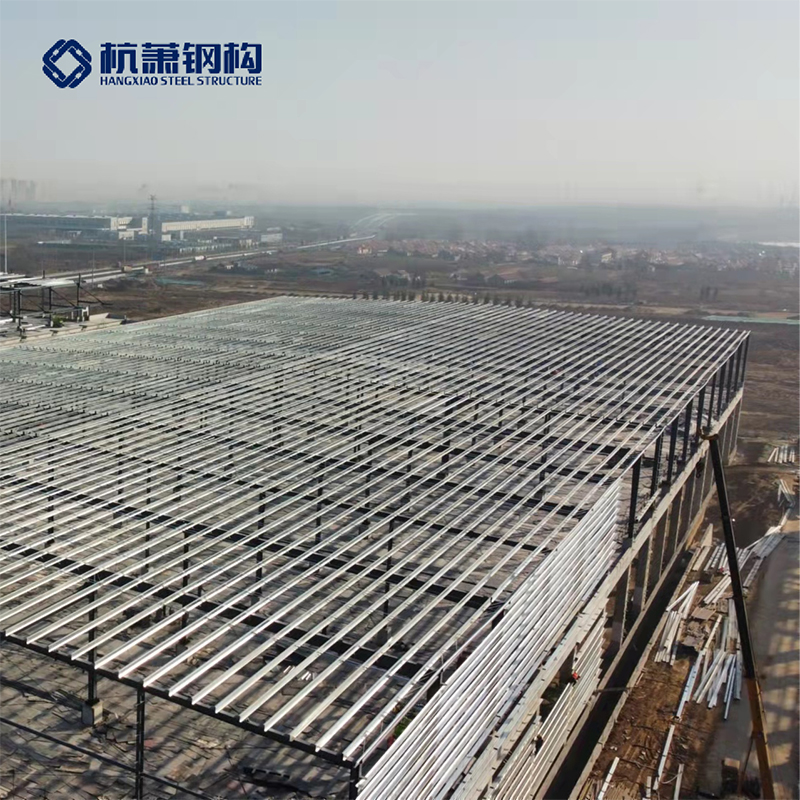
Architects and structural engineers specifically specify Cold-Formed Steel (CFS) for coastal risk mitigation. It systematically solves multiple engineering challenges at once. Let us examine the core evaluation criteria for deploying CFS in high-wind environments.
Dimensional stability remains a critical survival factor during intense weather events. Prolonged storms inevitably drive moisture into tiny crevices. Organic materials absorb this water rapidly. Wood swells, warps, and eventually rots when exposed to high humidity. This swelling pushes out fasteners, weakening the entire frame. Steel does not absorb moisture. It does not warp, swell, or rot. It maintains its structural integrity even when the outer building envelope becomes compromised. You can rely on the frame holding its exact engineered dimensions through the harshest conditions.
Cold-formed steel delivers an exceptionally high strength-to-weight ratio. Lightweight steel significantly reduces the overall dead load placed on concrete foundations. This allows for more efficient foundation designs. Despite being lighter than heavy timber or masonry, CFS dramatically outperforms them in resisting lateral shear forces. High-wind events push structures sideways. The incredible tensile strength of steel prevents the building from racking or leaning under these powerful horizontal pressures.
Manufactured steel eliminates organic material inconsistencies. Traditional lumber features knots, grain variations, splits, and differing moisture contents. These flaws create hidden weak points inside walls. Conversely, steel production is strictly regulated. Every single steel stud performs exactly to its engineered load rating. This absolute standardization removes guesswork from structural safety.
Evaluation Metric | Cold-Formed Steel (CFS) | Traditional Wood Framing |
|---|---|---|
Material Consistency | 100% uniform. No hidden flaws. Exact yield strength. | Organic variations. Knots and splits weaken capacity. |
Moisture Reaction | Impervious to moisture. Does not warp or swell. | Absorbs water. Swells, warps, and fuels mold growth. |
Fastener Reliability | Screws lock into steel threads for high pull-out resistance. | Nails rely on friction. Prone to withdrawal under suction. |
Ductility | High. Bends and absorbs shock without sudden breaking. | Low. Can fracture suddenly under extreme shear stress. |
Meeting strict building codes requires precise mathematical proof. Local authorities demand undeniable structural evidence before issuing construction permits in coastal regions. Utilizing engineered steel drastically streamlines this rigorous regulatory process.
Steel offers highly predictable, standardized engineering values. These exact numbers map seamlessly into the complex software models required by coastal regulators. Engineers use these values to satisfy the demanding Florida Building Code (FBC). They also utilize them to meet rigorous ASCE 7 wind load provisions. Regulators implicitly trust steel systems because their performance limits are scientifically proven and easily verifiable. When an inspector reviews a steel framing plan, the structural math leaves no room for interpretation.
The building envelope requires a rigid, unyielding substrate to function correctly. Exterior cladding and heavy hurricane-impact fenestration systems attach directly to the structural frame. During a hurricane, extreme wind pressure forces walls to bend slightly inward. This inward bending is called deflection. If a wall deflects too much, rigid impact glass will shatter inside its frame. Steel acts as a highly rigid substrate. It dramatically minimizes envelope deflection under pressure. By preventing the walls from flexing deeply, steel keeps windows and doors securely seated, preventing dangerous envelope blowouts.
Ensure fastener spacing matches the approved Notice of Acceptance (NOA) for cladding.
Verify the structural steel gauge is thick enough to receive heavy-duty window frame anchors.
Use localized wind-speed maps to determine the exact design pressure (DP) rating required for the envelope.
The construction industry is rapidly transitioning away from manual, error-prone structural calculations. Modern builders now rely entirely on automated, precision engineering. This digital transformation changes how we safely build coastal properties.
Building Information Modeling (BIM) drives modern automated structural detailing. Advanced engineering software digitally models specific regional wind pressures. For example, the software easily simulates a Category 5 storm featuring 157+ mph winds. It calculates the exact aerodynamic pressures acting on every corner of the building. The system then automatically specifies the exact steel gauge required for every stud. It dictates exact stud spacing and maps out specific connection hardware for every joint. We eliminate human estimation from structural design.
Chart: Impact of Wind Speed on Design Elements | ||
Wind Speed Rating | Structural Risk Level | Required CFS Modifications |
|---|---|---|
110 - 130 mph | Moderate Uplift | Standard 16-inch spacing. Base gauge framing. |
131 - 156 mph | High Uplift & Shear | Reduced spacing (12-inch). Heavier gauge tracks. |
157+ mph (Cat 5) | Extreme Multi-directional | Heavy-gauge studs. Custom hold-downs. Reduced spans. |
Off-site roll-forming provides a massive operational and safety advantage. Manufacturing facilities produce structural components based directly on the approved 3D software model. Components arrive on the construction site already cut-to-length. Machines pre-punch all fastener holes and service line routing paths. This precise prefabrication minimizes on-site human error. Installers simply align the pre-punched holes and drive the screws. Because the software dictates the hole placement, crews assemble critical hurricane-rated connections with absolute, millimeter-perfect accuracy.
We must candidly evaluate the practical challenges of coastal steel construction. Skeptics often point to specific environmental risks associated with high-salt climates. Rust remains a legitimate concern when building near the ocean. However, you can manage these risks easily through proper specification.
The coastal corrosion threat requires proactive, engineered protection. Coastal environments mandate heavy zinc-alloy coatings. You must specify G90 or higher galvanization for the steel frame. The zinc layer acts as a sacrificial barrier, oxidizing instead of the underlying steel. Furthermore, you must install continuous moisture barriers over the exterior sheathing. Builders must also meticulously avoid dissimilar metal contact. For example, securing copper plumbing directly to galvanized steel causes rapid galvanic corrosion. Using simple rubber isolators prevents this reaction entirely.
Specifying interior-grade G40 coating for coastal exterior walls.
Allowing standing water to pool inside base tracks during construction.
Failing to tape or seal the seams of the exterior weather barrier.
We acknowledge upfront material costs for engineered steel may carry a premium over standard timber framing. The highly refined manufacturing process and heavy zinc coatings drive this initial cost. However, developers offset this premium rapidly through verifiable long-term cost reductions. Engineered Hurricane-Rated Steel Buildings command significantly lower builder's risk insurance rates during construction. Post-construction property insurance premiums also drop considerably because actuaries understand steel's survivability. You also experience dramatically reduced warranty callbacks related to drywall cracking or frame settling. Most importantly, robust survival capabilities prevent total-loss rebuilds after a major storm event. These combined benefits ensure an exceptionally favorable return on investment.
Hurricane-rated steel buildings offer an evidence-based, scientifically predictable approach to surviving catastrophic wind events. They move construction far beyond mere minimum code compliance, delivering true structural resilience. Steel's inherent ductility, combined with a perfectly engineered continuous load path, ensures buildings remain securely anchored during extreme weather.
Decision-makers should prioritize manufacturing partners who offer comprehensive software-backed engineering. You should demand transparent coating specifications to ensure long-term corrosion resistance. Always partner with firms boasting a proven track record navigating complex HVHZ jurisdictions.
Your immediate next steps should include consulting with a structural engineer specializing in cold-formed steel. Request a localized wind-load analysis for your specific coastal site. Finally, utilize modern design software to model potential structural survivability before you commit to a framing material.
A: Yes, when engineered and constructed specifically to handle 157+ mph wind loads, utilizing precise gauge steel, tight fastener spacing, and a continuous load path anchored to the foundation.
A: They are highly resistant if properly specified. Coastal environments require heavy zinc-alloy coatings (such as G90 or G115) and properly detailed weather barriers to prevent salt-moisture intrusion from reaching the structural frame.
A: The upfront material cost is often slightly higher; however, when factoring in the required hurricane clips, structural strapping, and intensive labor needed to bring wood up to high-wind codes, the installed costs often equalize. Long-term insurance savings heavily favor steel.
A: Red iron (structural steel) is typically used for large-scale commercial and industrial structures requiring massive clear spans. Cold-formed steel (light gauge) is ideal for mid-rise, residential, and modular framing, offering high precision and rapid assembly while easily meeting HVHZ standards.


