


Views: 0 Author: Site Editor Publish Time: 2026-06-20 Origin: Site


Industrial construction currently faces an inherent, unavoidable tension. We must consistently balance massive facility scale and unyielding structural integrity with increasingly strict ESG (Environmental, Social, and Governance) mandates. Developers and project stakeholders can no longer ignore local carbon emission caps. They must adhere to rigorous environmental standards while maintaining profitable development cycles. Fortunately, the narrative surrounding heavy building materials has shifted drastically over the past decade.
While traditional steel production remains carbon-intensive, modern manufacturing processes and sophisticated lifecycle management have evolved immensely. They have effectively transformed steel into a fundamental pillar of the circular construction economy. This comprehensive guide serves as a practical, decision-stage evaluation tool for developers and procurement teams. You will learn exactly how to assess the true environmental impact and compliance factors of your next major project. We will explore how choosing an Industrial Steel Structure delivers profound long-term sustainability benefits without compromising structural performance.
An industrial steel structure is infinitely recyclable, functioning as a "material bank" that minimizes end-of-life landfill waste.
Prefabrication reduces on-site construction timelines, significantly cutting heavy machinery emissions and localized environmental disturbance.
Integrating insulated metal panels (IMPs) and cool roof coatings offsets the material's thermal conductivity, drastically reducing operational HVAC energy usage.
Procurement success relies on verifying Environmental Product Declarations (EPDs) and sourcing from mills utilizing Electric Arc Furnace (EAF) technology.
Industrial developers currently face intense, mounting pressure from multiple regulatory bodies. They must strategically meet stringent local carbon emission caps. They also need to secure competitive green financing and achieve prestigious LEED certifications. Crucially, they must accomplish all this without compromising long-term facility durability. Eco-friendly compliance is no longer a peripheral corporate goal. It directly impacts your core business metrics and project viability.
Consider the fundamental "cradle-to-cradle" concept driving modern construction. We frequently contrast steel's closed-loop lifecycle against traditional building materials. For instance, cast-in-place concrete typically faces a highly linear lifespan. Demolished concrete usually ends up as down-cycled road aggregate. Often, it just becomes incredibly bulky landfill waste taking up precious municipal space. Conversely, an Industrial Steel Structure functions entirely differently. You essentially build a reusable, high-value material bank for future generations.
The return on investment for sustainability extends far beyond public goodwill. Forward-thinking eco-friendly compliance translates into tangible, lucrative asset improvements. Buildings designed for high energy efficiency often qualify for significantly lower insurance premiums. Developers frequently experience much more favorable zoning approvals during contentious planning phases. Furthermore, a highly rated sustainable facility naturally commands a higher asset resale value. Institutional investors aggressively seek out climate-resilient, compliant portfolios. They want future-proof assets resistant to carbon taxation and shifting environmental legislation.
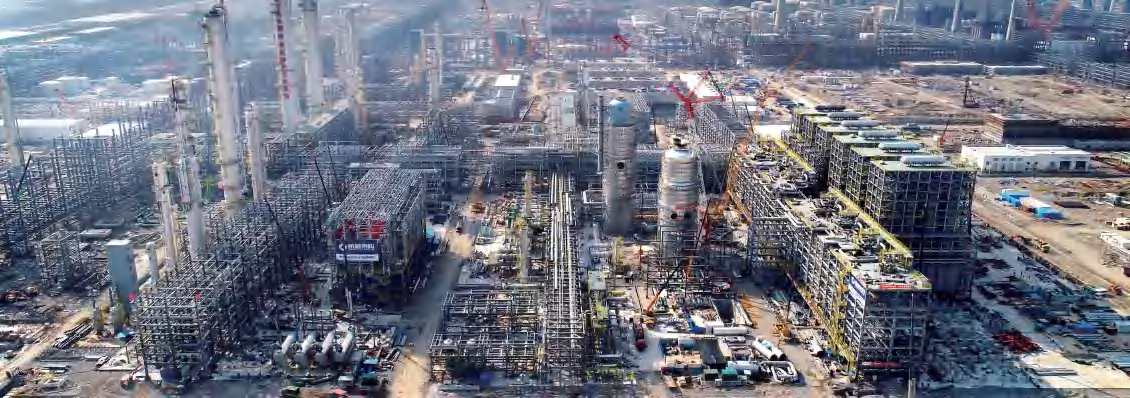
Let us thoroughly analyze the raw material itself. We must differentiate between traditional Basic Oxygen Furnace (BOF) steel and modern alternative solutions. Electric Arc Furnace (EAF) technology completely revolutionized the global steel industry. EAF steel utilizes up to 90% or more recycled scrap metal. This advanced electrical process significantly reduces the embodied carbon of the final structural framing compared to legacy production methods.
When evaluating absolute recyclability, steel stands completely alone among structural materials. Structural steel can be recycled infinitely. It suffers zero loss in structural integrity during the extreme melting process. It maintains its exact, specified metallurgical properties generation after generation. You can literally melt down a century-old bridge beam to construct a modern logistics warehouse. This phenomenon represents true circularity.
We must directly address the elephant in the room regarding environmental transparency. Steel manufacturing undeniably requires immense upfront energy input. Trust relies on balancing this harsh reality against objective lifecycle metrics. We amortize this initial carbon footprint over a vast operational timeline. Consider a typical industrial facility lifespan easily exceeding 50 years. Combine this extended lifespan and an end-of-life recovery rate often soaring over 98%. The long-term environmental math heavily favors steel over disposable alternatives.
Comparison Table: BOF vs. EAF Steel Production Metrics | ||
Evaluation Dimension | Basic Oxygen Furnace (BOF) | Electric Arc Furnace (EAF) |
|---|---|---|
Primary Raw Material Source | Mined Iron Ore & Coking Coal | Post-consumer Scrap Steel |
Typical Recycled Content | 25% - 30% maximum | 90% - 100% easily achievable |
Embodied Carbon Impact | High Upfront Carbon Emissions | Significantly Lower Carbon Footprint |
Energy Source Dependency | Fossil Fuel Intensive (Coal) | Electricity (Can utilize renewable grids) |
Heavy construction sites inherently disrupt local, sensitive ecosystems. However, intelligent prefabrication acts as a remarkably powerful eco-strategy. Engineers detail an Industrial Steel Structure entirely off-site before ground even breaks. Fabricators cut, drill, and weld massive structural components in highly controlled factory environments. This precision digital engineering results in near-zero on-site material waste. Compare this streamlined efficiency against constant, inaccurate on-site cutting. Contrast it against highly messy, unpredictable concrete pouring operations.
This factory-first approach also guarantees a dramatically reduced site footprint. Prefabricated components arrive exactly when needed, ready for rapid assembly. Shorter erection times mean far fewer diesel-powered crane hours. You run large on-site generators for much shorter overall durations. Consequently, you significantly reduce localized air pollution affecting nearby neighborhoods. You also minimize severe noise disturbance impacting surrounding residential communities.
Furthermore, steel delivers unique, measurable foundation efficiency. It possesses an exceptionally high strength-to-weight ratio compared to heavy masonry. The completed superstructure itself weighs considerably less than equivalent concrete buildings. Therefore, it requires much shallower, less complex concrete foundations. You consume far fewer raw resources underground. This directly reduces heavy cement needs right at the project's inception phase.
Consider these specific site impact reductions when planning your operations:
Eliminated Material Waste: Factory precision effectively eliminates massive, costly scrap piles on the active job site.
Reduced Machine Emissions: Faster assembly halves the operating hours of heavy, diesel-burning lifting equipment.
Minimal Soil Disturbance: Lighter overall building weights require much less invasive, destructive excavation processes.
Streamlined Logistics: Just-in-time delivery models reduce truck idling times and ease traffic congestion around the site.
We must transparently acknowledge a primary material weakness immediately. Bare steel is highly conductive by nature. It acts as a notoriously poor thermal insulator on its own. We frame the practical solution through rigorous, system-level design integration. You do not just erect a bare frame; you engineer a tightly climate-controlled envelope.
Cool metal roofing plays a vital, non-negotiable role here. Manufacturers apply highly reflective, specialized pigments onto exterior steel roof panels. These advanced coatings actively reflect intense solar radiation away from the building surface. This directly reduces the notorious urban heat island effect around dense industrial parks. More importantly, it drastically lowers facility cooling costs during peak, demanding summer months.
Insulation synergies complete the overarching environmental strategy. You must utilize high R-value Insulated Metal Panels (IMPs) for wall cladding. These composite panels sandwich premium polyurethane insulating foam between durable exterior steel sheets. Installers combine them alongside robust, continuous vapor barriers. This intelligent combination eliminates thermal bridging and creates a heavily airtight building envelope.
Such a high-performance envelope minimizes costly HVAC leakage effectively. Large-scale distribution warehouses and manufacturing factories otherwise bleed conditioned air constantly. A properly sealed Industrial Steel Structure locks in generated thermal energy. This lowers lifetime energy consumption significantly. It ensures massive air handlers operate at optimized, lower capacities year-round.
Your initial procurement strategy dictates the ultimate environmental success of the build. You must evaluate potential steel fabricators extremely carefully. Consider their overall, end-to-end transportation footprint. Domestic sourcing often yields much lower transit emissions than overseas importing. You must weigh the heavy logistics carbon cost against initial material pricing.
Strict verification standards separate genuine sustainability from empty marketing claims. Instruct your purchasing teams to formally request Environmental Product Declarations (EPDs). An EPD provides standardized, third-party verified data regarding the material's precise lifecycle impacts. You must also verify structural compliance against established green frameworks. Look for strict LEED v4.1 alignment. Check regional steel institute guidelines for highly localized best practices.
Be constantly vigilant and avoid critical procurement risks. Beware of blatant "greenwashing" attempts by unverified vendors. Low-cost suppliers often lack a documented, rigorous chain-of-custody. They might claim high recycled content without any verifiable proof. You desperately need traceable, transparent documentation for every single structural beam delivered.
Establish a remarkably clear framework for next-step actions. Bring your rigid sustainability requirements into the early Request for Proposal (RFP) stage. Engage proactively with structural engineers and general contractors.
Follow these standardized steps when drafting an environmentally conscious RFP:
Demand Verified EPDs: Mandate third-party verified Environmental Product Declarations for all primary and secondary structural components.
Specify EAF Steel Production: Request high-recycled-content steel produced explicitly via Electric Arc Furnaces wherever structurally viable.
Evaluate Sourcing Logic: Ask vendors to accurately map their supply chain routes to calculate estimated freight emissions.
Integrate Finishing Specs: Include precise, non-negotiable R-value requirements for IMPs and solar reflectivity ratings for roof coatings.
Audit the Chain-of-Custody: Require detailed documentation tracking scrap origin straight through the final milling process.
Let us summarize the core reality of modern industrial development. An industrial facility is not inherently green just by existing on a site. Its eco-friendliness is meticulously engineered from day one. You achieve this vital goal through smart, verified procurement prioritizing EAF steel. You drive it further through highly efficient design leveraging prefabrication. Finally, you secure long-term performance using optimal finishing systems like IMPs and cool roofs. Each deliberate decision builds toward a circular, low-impact asset.
Take decisive, informed action on your upcoming industrial developments. Consult your structural engineering team early in the initial schematic phase. Demand a comprehensive EPD-backed proposal from your shortlisted fabricators. Commission a rigorous lifecycle carbon assessment to map your exact environmental return. Sustainable, resilient industrial construction is entirely within your reach today.
A: Yes, it is highly eligible. Projects earn points primarily through the "Materials and Resources" category due to steel's extremely high recycled content. You can also gain significant points under "Sustainable Sites" because prefabrication significantly reduces the overall construction footprint and limits local site disturbance.
A: Steel generally has a higher upfront embodied energy per ton. However, it boasts a drastically lower lifecycle footprint. This dynamic is due to its light weight, prefabrication efficiency, and a near-100% recovery rate at demolition, whereas structural concrete is rarely recycled for high-stress applications.
A: Modern finishing minimizes these chemical risks effectively. Advanced fabricators now use low-VOC (Volatile Organic Compounds) coatings. Furthermore, modern closed-loop galvanizing processes actively capture and reuse chemical emissions. These strict, regulated practices neutralize historical environmental concerns associated with aggressive steel preservation.


